

Connection methods, safe placement, and the readiness items worth confirming while the weather is good
A generator earns its value in the hours after the lights go out. Getting to that moment smoothly depends on decisions made well beforehand: how the generator connects to the house, where it sits while it runs, and whether the fuel, oil, and cords are ready to go. Those are all things worth confirming on a clear afternoon rather than by flashlight.
Start With What You Have
For most homeowners, the two common setups are portable generators and permanently installed standby generators, and the readiness checklist differs for each.
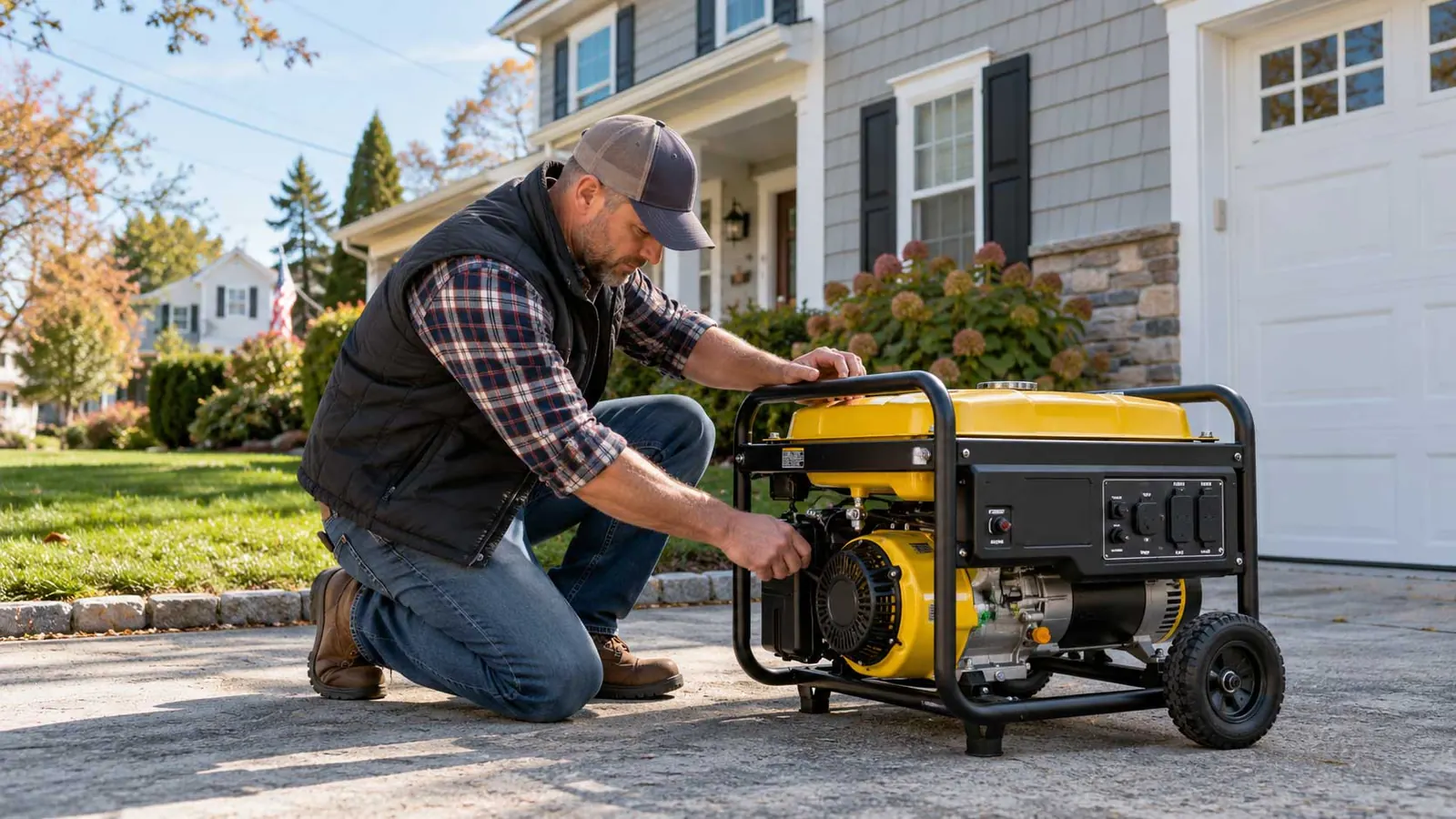
A portable generator is a wheeled, engine-driven unit that gets rolled out when it is needed, started manually, and fueled by gasoline or propane. A standby generator is permanently installed outside the house, commonly runs on natural gas or propane, and is paired with automatic transfer equipment that detects the loss of utility power, starts the generator, and transfers the connected load.
A standby generator is wired into the house through transfer equipment as part of its installation. A portable generator raises the connection question every time it comes out of the garage.
How the Generator Connects to the House
The governing principle is source isolation. Utility power and generator power must never reach the house wiring at the same time. NEC Article 702, which covers optional standby systems, requires listed transfer equipment that prevents the two sources from being connected simultaneously. A portable generator can either power appliances directly or connect to the home through approved transfer equipment. What it should never do is feed house wiring through an improvised cord or connection.
Cord-Connected Appliances
The simplest approach keeps the generator entirely separate from the house wiring. Appliances plug directly into the generator using outdoor-rated extension cords sized for the load. PSEG Long Island recommends a cord longer than 20 feet so the generator stays at a safe distance while it runs.
This approach works for a refrigerator, a sump pump, and a few lights. It reaches its limit with anything hardwired: the furnace, the well pump, the boiler, and any circuit without a plug on the end of it.
A Listed Transfer Switch
A transfer switch moves the connected load between utility power and generator power. Depending on the design, it may serve selected circuits or the entire service. It physically prevents both sources from feeding the house at once. Manual transfer switches are operated by hand when the generator is running. Automatic transfer switches detect the loss of utility power and transfer the load on their own, which is how standby generators operate.
Approved transfer equipment is what allows a portable generator to supply hardwired household circuits safely during an outage. The installation also includes a power inlet on the outside of the house, so a portable generator connects with a single rated cord instead of several running through a window.
A Listed Interlock Kit
An interlock kit is a mechanical plate that mounts on the panel and links the main breaker to a dedicated generator breaker. The plate allows only one of those breakers to be on at a time. Turning the generator breaker on requires turning the main breaker off first, which is how the arrangement achieves mechanical source isolation.
A properly listed, panel-specific interlock can provide the required mechanical source isolation for an appropriate portable-generator setup. Interlocks must be listed for the panel they are installed in, and one designed for a given manufacturer's panel does not carry over to another. An interlock is a different arrangement from a transfer switch rather than a substitute for one. Transfer switches can incorporate automatic operation, load management, service-rated switching, and other capabilities an interlock does not provide. The correct method depends on the panel, the generator, the loads, utility requirements, and local code.
Why the Double-Male Cord Is Dangerous
The shortcut is a double-male extension cord run from the generator into a dryer or range receptacle. It sends generator power into the house wiring with nothing isolating the utility connection.
Two hazards follow. The backfeed can travel through the service transformer and energize utility lines at dangerous voltage, creating a potentially deadly hazard for line crews and others. PSEG Long Island warns that crews restoring power face electrocution risk when a generator has been connected without their knowledge, because they are working lines they have confirmed de-energized.
The cord itself is the second hazard. With one end plugged into a live generator, the prongs on the other end are energized and exposed.
A licensed electrician can install code-compliant transfer equipment or, where permitted for the specific panel and installation, an approved interlock arrangement. The goal is the same: prevent generator power and utility power from being connected to the home at the same time.
Where the Generator Runs
Placement carries its own set of requirements. Consumer Product Safety Commission guidance places portable generators outdoors only, at least 20 feet from the house, with the exhaust directed away from windows, doors, and vents. PSEG Long Island uses the same 20-foot distance, measured from any window, door, or vent.
Garages, basements, crawlspaces, sheds, porches, and carports are all enclosed or semi-enclosed enough to accumulate carbon monoxide. Opening a door or window does not provide enough ventilation to change that. CPSC estimates that about 100 people die each year in the United States from carbon monoxide poisoning associated with portable generators, and its reporting finds carbon monoxide deaths from consumer products concentrated in the colder months, when winter storms knock out power and generators go into service.
Carbon monoxide is colorless and odorless, and exposure can cause unconsciousness before someone recognizes the symptoms. Working CO alarms inside the house are the detection layer that placement alone does not provide. CPSC recommends battery-operated alarms or alarms with battery backup on every level of the home and outside sleeping areas, tested monthly.
Keep the generator dry and follow the manufacturer's instructions for weather protection. Many outages arrive with storms, which is exactly when a generator may end up exposed to rain or standing water. Operating one in wet conditions the manufacturer does not permit introduces a shock hazard alongside the equipment damage.
Stay within the generator's rated output. Adding appliances one at a time does not change the total load the generator can safely carry, and overloading it can overheat the unit and the cords serving it.
Refueling gets its own rule: shut the generator down and let it cool before adding fuel. Gasoline spilled on a hot engine can ignite.
The Pre-Season Readiness Check
A generator that has been sitting since the last outage benefits from a walk-through before the next one. These are the items to confirm:
- Start it. Start it according to the manufacturer's instructions and confirm that it starts and produces power. If the manufacturer recommends periodic operation under load, follow that procedure. Standby units run a self-test on a schedule set at installation, so confirm that exercise cycle is still happening.
- Check the fuel. Gasoline degrades in storage. Fuel left in the tank or in cans from last season may need replacing, and stabilizer helps for fuel that will sit. Store gasoline only in approved containers, away from ignition sources and living spaces, and follow local fire-code requirements.
- Check the oil and air filter. Follow the manufacturer's service interval. An engine that runs for days during an extended outage works harder than one used for weekend projects.
- Check the standby battery. A standby generator starts on a battery. A battery that has reached the end of its life leaves an automatic system unable to start when the transfer signal arrives.
- Inspect the cords. Cords used with a generator belong outdoors and need to be rated for the load and free of cuts, cracks, or damaged prongs.
- Test the CO alarms. Press the test button on each alarm and replace batteries on the manufacturer's schedule. CO alarms also have a service life printed on the unit and stop being reliable past it.
- Confirm the connection plan. Know which circuits the generator will carry and how it ties in. Working that out during an outage is harder than working it out now.
Adding a Transfer Switch or a Standby Generator
Installing transfer equipment involves work in or around the service equipment and typically requires a licensed electrician, permits, and inspection under the rules of the town, city, or village where the work is performed.
Depending on the scope of the work, the project may also trigger PSEG Long Island service or inspection requirements. A licensed electrician can determine what applies before the work begins.
A standby generator installation involves selecting equipment for the loads it will carry and coordinating that with the existing service, so panel capacity enters the conversation alongside generator selection.
PSEG Long Island's Small Generator Interconnection Procedures apply to generation designed to operate in parallel with the utility system. A standby generator that transfers the house between sources without ever running in parallel falls outside that process. A licensed electrician can confirm which requirements apply to a given installation.
Get the Connection Handled Before You Need It
Ohmega Electric works on generator connections across Nassau and Suffolk County. We evaluate the existing service, recommend the transfer arrangement that fits the panel and the loads you want covered, and handle the applicable permit and inspection requirements for your municipality.
As a Service-Disabled Veteran-Owned Small Business with more than 30 years of residential electrical experience, we will tell you what your setup needs and what it already has covered.
Call 631-729-6024 or contact us online to schedule a consultation.